
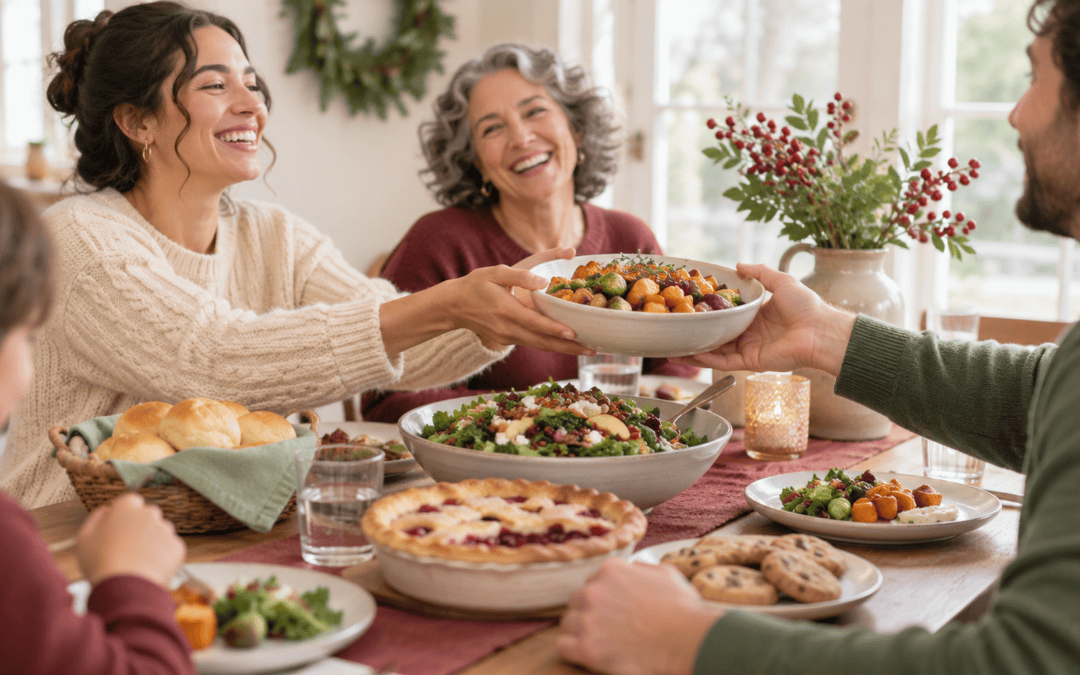
The holidays can bring celebrations, traditions, family gatherings, busy schedules, and a lot of food. For many people, holiday eating also comes with added stress, food rules, guilt, or the feeling that they need to choose between enjoying the season and sticking with their nutrition goals.
But nutrition around the holidays doesn’t have to be all-or-nothing. Understanding why this time of year can feel challenging is a good place to start.
Why Does Holiday Eating Feel So Difficult?
Food rules become louder.
Holiday foods are often labeled as “bad,” “unhealthy,” or foods we should only eat on special occasions. When we believe we shouldn’t eat something, having it can trigger guilt or the feeling that we’ve already “blown it.”
There are foods we don’t normally have.
Grandma’s pie, holiday cookies, special appetizers, and family recipes may only appear once a year. Naturally, we may be more excited about these foods – and that’s okay! Food is about more than nutrients. It can also represent tradition, connection, culture, and memories.
Emotions can be complicated.
The holidays may bring joy and excitement, but they can also bring grief, loneliness, family conflict, financial stress, or seasonal changes in mood. Food can become intertwined with all of these emotions.
Schedules get disrupted.
Shopping, parties, travel, school programs, work events, and other commitments can make it harder to eat consistently. Skipping meals to “save calories” for a holiday party may sound helpful, but arriving overly hungry can actually make it more difficult to recognize hunger and fullness cues.
Finding Balance With Nutrition and the Holidays:
Instead of trying to eat “perfectly,” consider what would help you feel physically and emotionally well this season.
Eat consistently throughout the day. Don’t skip breakfast or lunch because you know a large dinner is coming. Regular meals and snacks can help you arrive comfortably hungry rather than ravenous.
Give yourself permission to enjoy holiday foods. Restriction can make holiday foods feel even more powerful. Giving yourself permission to eat something can reduce the urgency to “eat as much as possible while I can.”
Add nutrition rather than taking foods away. Before a party or gathering, consider having a snack with protein, carbohydrates, fiber, or fat. At meals, look for foods that provide nourishment and foods you simply enjoy.
Move your body because it feels good – not to compensate. A walk after dinner can be a wonderful way to get fresh air, connect with family, reduce stress, or support digestion. It doesn’t need to “burn off” anything you ate.
Get curious about guilt. If you notice yourself thinking, “I shouldn’t have eaten that,” ask yourself where that rule came from. One meal, dessert, or holiday weekend does not define your health.
Remember: The Holidays Are More Than What You Eat
This holiday season, consider replacing perfection with flexibility, restriction with permission, and guilt with curiosity.
Your nutrition goals can still matter and there is room for holiday favorites, too.
Written by: Laura Thompson, RD, LMNT, LD, a dietitian and nutrition therapist
Spence Counseling Center provides Christ-centered counseling services that integrate Biblical truth with professional therapeutic practices. With a team of experienced counselors, we help individuals, couples, and families find healing, hope, and growth through faith-based guidance. Our mission is to walk alongside clients as they align their hearts and minds with God’s Word, fostering lasting emotional, spiritual, and relational health. Wherever you may be in life’s journey, we are committed to helping you find strength, knowledge, and the skills to break the patterns that damage relationships and cause emotional pain. We help hurting people find genuine healing.